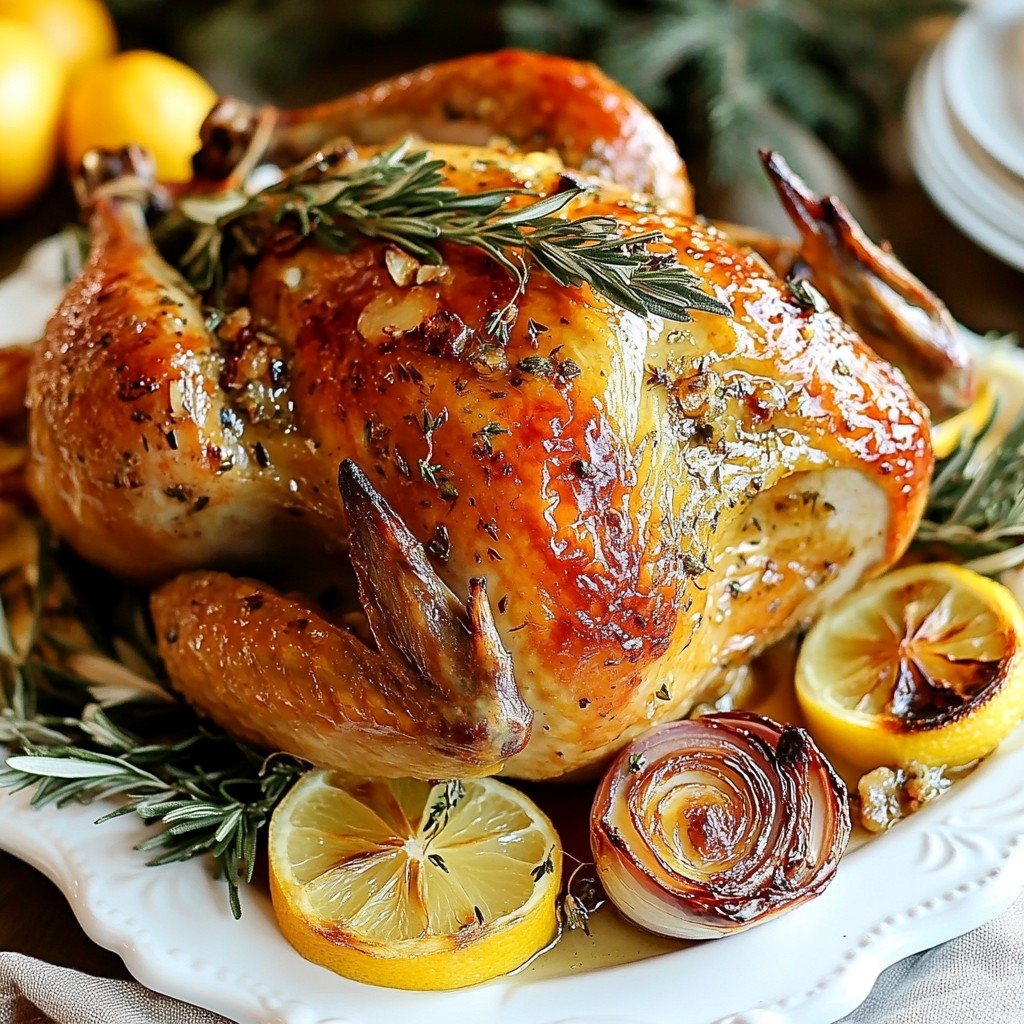
If you're craving a holiday dish that impresses, you've landed in the right spot! My Garlic Butter Herb Roasted Turkey is savory, juicy, and packed with flavor. I’ll guide you through each step to make this show-stopping meal. With fresh herbs and a rich garlic butter blend, your turkey will be a hit. Let’s dive into the recipe that will have everyone asking for seconds!
Why I Love This Recipe
- Flavor Explosion: The garlic butter herb blend creates a mouthwatering flavor that permeates the turkey, ensuring every bite is delicious.
- Moist and Tender: Thanks to the herb-infused butter and regular basting, this turkey comes out juicy and tender, making it the star of your feast.
- Beautiful Presentation: With its golden brown skin and garnished with fresh herbs and lemon, this turkey looks as good as it tastes, perfect for festive occasions.
- Family Tradition: This recipe has been passed down through generations, making it a cherished part of holiday gatherings and family celebrations.
Ingredients
Main Ingredients for Garlic Butter Herb Roasted Turkey
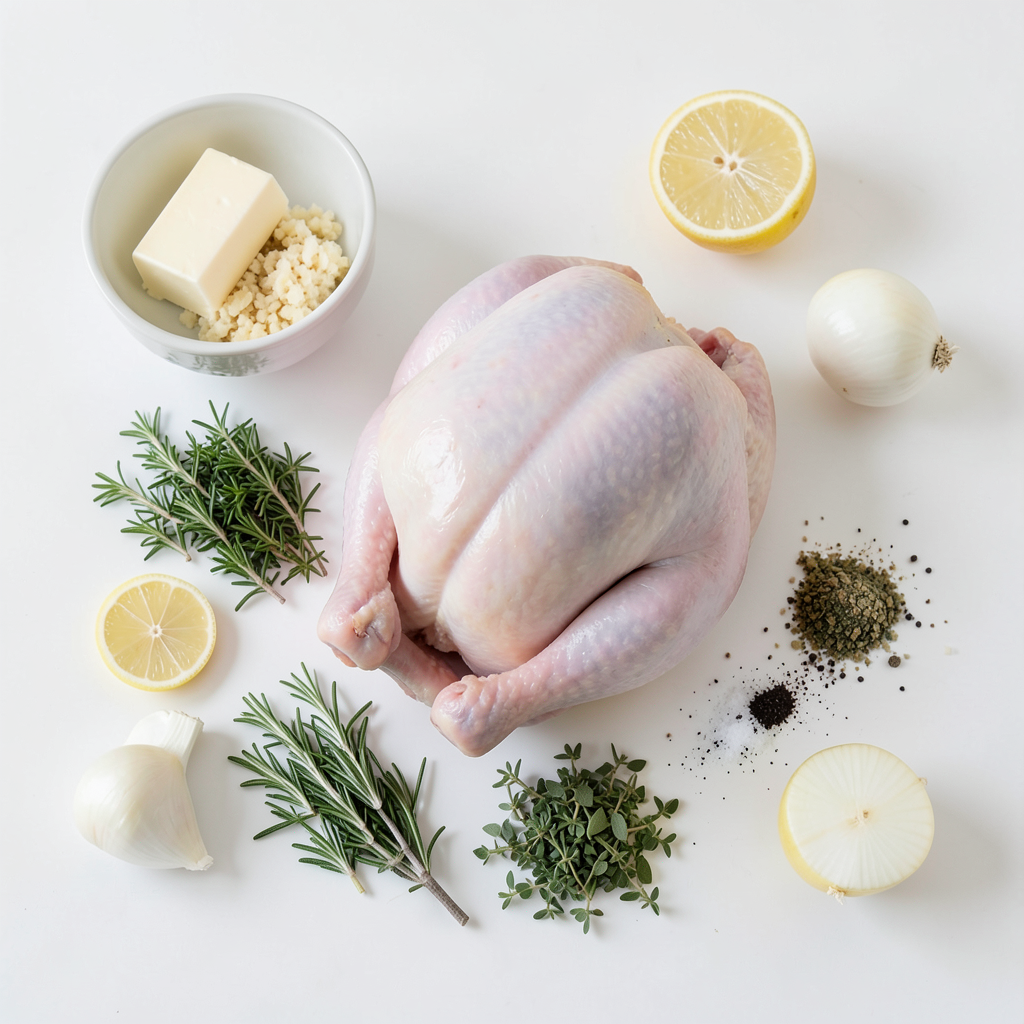
To make a tasty garlic butter herb roasted turkey, you'll need:
- 1 whole turkey (10-12 lbs), thawed
- 1 cup unsalted butter, softened
- 10 cloves garlic, minced
- 2 teaspoons sea salt
- 1 teaspoon black pepper
Fresh Herbs and Spices Used
Fresh herbs bring life to this dish. I use:
- 1 tablespoon fresh rosemary, chopped
- 1 tablespoon fresh thyme, chopped
- 1 tablespoon fresh sage, chopped
These herbs give the turkey a rich flavor. Their fresh scent makes the kitchen smell amazing.
Optional Ingredients for Extra Flavor
Want to add more taste? You can use:
- 1 lemon, quartered
- 1 onion, quartered
- Extra fresh herbs for stuffing, like thyme, rosemary, and sage
These optional ingredients add a zesty kick and enhance the overall flavor. They make the turkey even more delicious and fragrant as it roasts.
Step-by-Step Instructions
Preparation Steps Before Roasting
First, preheat your oven to 325°F (165°C). This helps the turkey cook evenly. Next, gather your ingredients. You will need:
- 1 whole turkey (10-12 lbs), thawed
- 1 cup unsalted butter, softened
- 10 cloves garlic, minced
- 1 tablespoon fresh rosemary, chopped
- 1 tablespoon fresh thyme, chopped
- 1 tablespoon fresh sage, chopped
- 2 teaspoons sea salt
- 1 teaspoon black pepper
- 1 lemon, quartered
- 1 onion, quartered
- Fresh herbs for stuffing (like thyme, rosemary, and sage)
Now, mix the butter, garlic, and herbs in a bowl. This will be your garlic butter.
Next, loosen the skin of the turkey from the breast. Use your fingers to make a pocket. Be careful not to tear the skin. Rub half of the garlic butter under the skin. Spread it evenly for great flavor.
Then, coat the outside of the turkey with the rest of the garlic butter. Make sure every part is well covered.
Stuff the turkey cavity with lemon, onion, and fresh herbs. This adds more flavor. Truss the legs together with kitchen twine. Tuck the wing tips under the turkey for even cooking.
Roasting the Turkey: Temperature and Timing
Place the turkey on a rack in a roasting pan. Roast in your preheated oven. Cook for about 2 to 2.5 hours. Check the temperature at the thigh; it should reach 165°F (75°C). This ensures your turkey is safe to eat.
Tips for Basting and Monitoring
Every 30 minutes, baste the turkey with the pan juices. This keeps it moist and adds flavor. If the skin starts to brown too fast, cover it with aluminum foil. This helps prevent burning.
Once the turkey is done, take it out of the oven. Let it rest for at least 20-30 minutes. This helps the juices stay in the meat. Now your garlic butter herb roasted turkey is ready to carve and serve!
Tips & Tricks
Ensuring a Moist and Flavorful Turkey
To keep your turkey moist, start with a good brine. A simple brine uses water, salt, and sugar. Soak the turkey overnight for the best results. When you roast it, basting is key. Baste the turkey every 30 minutes with its own juices. This adds moisture and flavor. Letting the turkey rest after cooking is also vital. Resting for 20 to 30 minutes lets the juices spread out. This makes each slice juicy and tender.
Best Practices for Seasoning
Seasoning is crucial for a flavorful turkey. Use a bright mix of herbs like rosemary, thyme, and sage. Mix these with softened butter to make a rich garlic butter. Rub this mixture under the skin and all over the turkey. This allows the flavors to seep in during cooking. Sea salt and black pepper are also essential for taste. Don’t forget to stuff the turkey with lemon and onion. These add extra flavor from the inside out.
How to Truss Your Turkey
Trussing keeps the turkey's shape during cooking. First, lay the turkey on a clean surface. Take some kitchen twine and cut a long piece. Start by tying the legs together. Cross the twine over the legs and pull it tight. Then tuck the wing tips under the bird. This holds everything in place. Trussing helps the turkey cook more evenly. It also gives a nice, neat look when you serve it.
Pro Tips
- Resting is Key: Let the turkey rest for at least 20-30 minutes after roasting. This helps the juices redistribute, resulting in a moister and more flavorful turkey.
- Flavor Infusion: For an extra burst of flavor, consider brining the turkey overnight before cooking. This keeps the meat juicy and adds depth to the overall taste.
- Use a Meat Thermometer: Invest in a good meat thermometer to ensure the turkey is cooked perfectly. Check the thickest part of the thigh; it should reach 165°F (75°C).
- Save the Drippings: Don’t forget to save the pan drippings! They make an excellent base for gravy and add rich flavor to your side dishes.
Variations
Different Herb Combinations to Try
You can change the herbs in this recipe to suit your taste. Try using dill, parsley, or even tarragon. These herbs add unique flavors. Mix and match to create your perfect blend. Just remember, fresh herbs pack more flavor than dried ones. Always start with a good base of garlic and butter.
Adding Citrus or Other Fillings
Adding citrus can bring a bright taste to your turkey. Consider using oranges or limes along with lemon. You can also stuff the turkey with apples or cranberries for a sweet twist. These fillings enhance the turkey's taste and make it more aromatic. Just be sure to balance the flavors with your herbs.
Adapting for Smaller or Larger Turkeys
If you have a smaller bird, adjust the butter and herbs. You can use about half the amounts listed for a turkey around 6-8 pounds. For larger turkeys, like those over 15 pounds, consider doubling the butter and herbs. Always keep the cooking time in mind. A larger turkey will need more time to roast. The key is to ensure the internal temperature reaches 165°F.
Storage Info
How to Store Leftover Turkey
After your feast, let the turkey cool down. Slice it into portions. Place the turkey in an airtight container. You can also wrap it tightly in plastic wrap or aluminum foil. Store the turkey in the fridge. It will stay fresh for about three to four days. For best taste, eat the leftovers soon.
Reheating Tips for Leftovers
When you are ready to enjoy your leftovers, preheat your oven to 325°F (165°C). Place the turkey slices in a baking dish. Add a splash of broth or water to keep the meat moist. Cover the dish with aluminum foil. Heat for about 20-30 minutes. Check the internal temperature; it should be 165°F (75°C) before serving.
Freezing Turkey for Future Meals
If you have a lot of turkey left, freezing is a great option. Wrap the turkey portions tightly in plastic wrap, then in aluminum foil. This helps to prevent freezer burn. Label the packages with the date. You can freeze the turkey for up to six months. When ready to eat, thaw it in the fridge overnight before reheating.
FAQs
How long should I cook a turkey per pound?
You should cook your turkey for about 13 to 15 minutes per pound. For example, if your turkey weighs 12 pounds, aim for about 2.5 to 3 hours. Always check the turkey at the thickest part of the thigh. This ensures it reaches 165°F (75°C) for safe eating.
What is the best way to check the turkey's doneness?
The best way to check if your turkey is done is to use a meat thermometer. Insert it into the thickest part of the thigh, avoiding the bone. When it reads 165°F (75°C), your turkey is safe to eat. You can also check the juices; they should run clear, not pink.
Can I prepare the garlic butter the day before?
Yes, you can make the garlic butter a day ahead. Mix your softened butter, garlic, and herbs, then store it in the fridge. This not only saves time but also lets the flavors blend well. Just bring it back to room temperature before using it on your turkey.
This article shared how to make a tasty garlic butter herb roasted turkey. We covered essential ingredients and fresh herbs to enhance flavor. I outlined easy preparation steps, roasting tips, and ways to keep the turkey moist. You can experiment with different herbs and even add citrus for variety. Finally, I provided storage tips and answered common questions.
Enjoy crafting your perfect turkey! You'll impress everyone at the table with your skills.